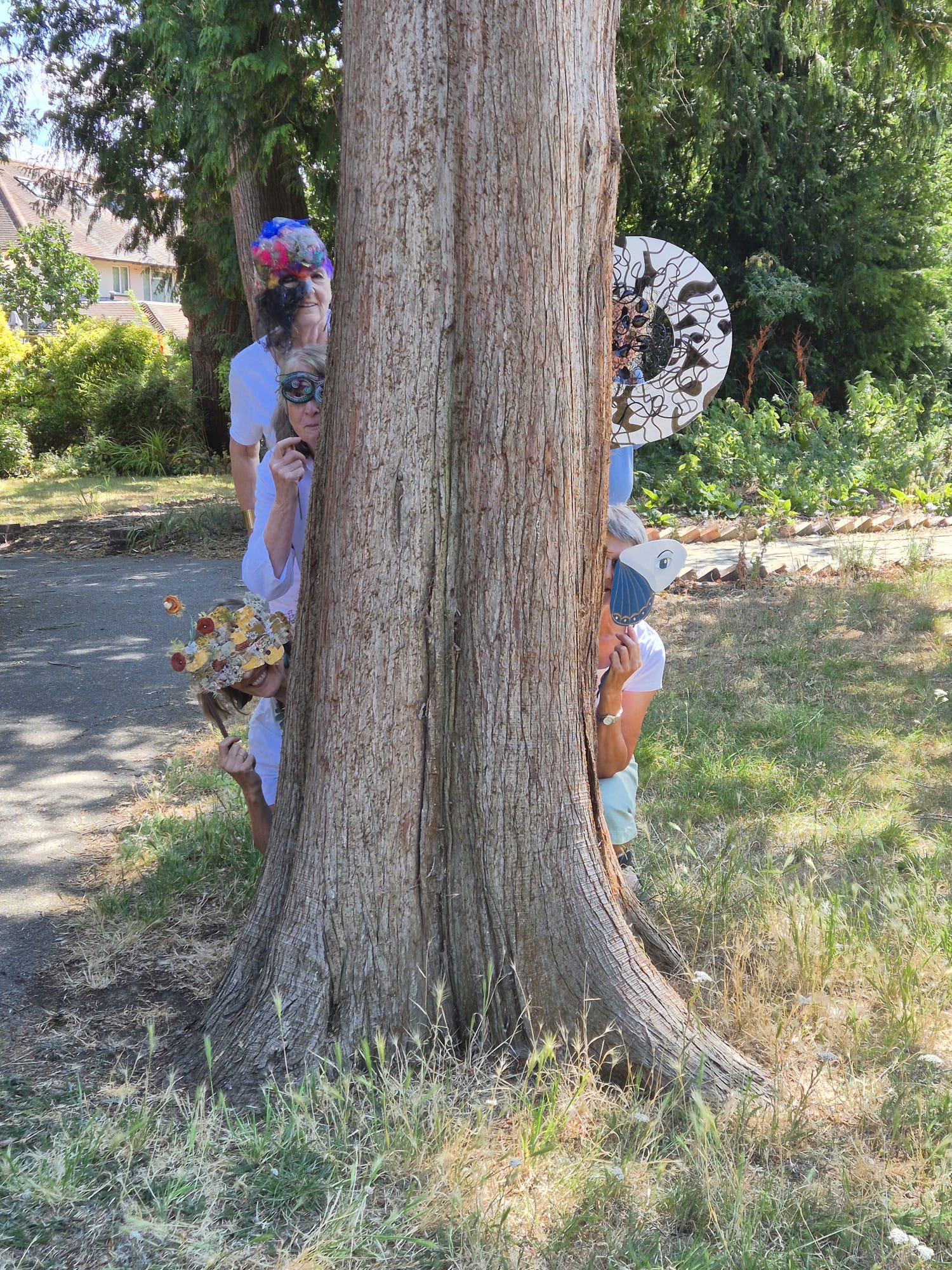
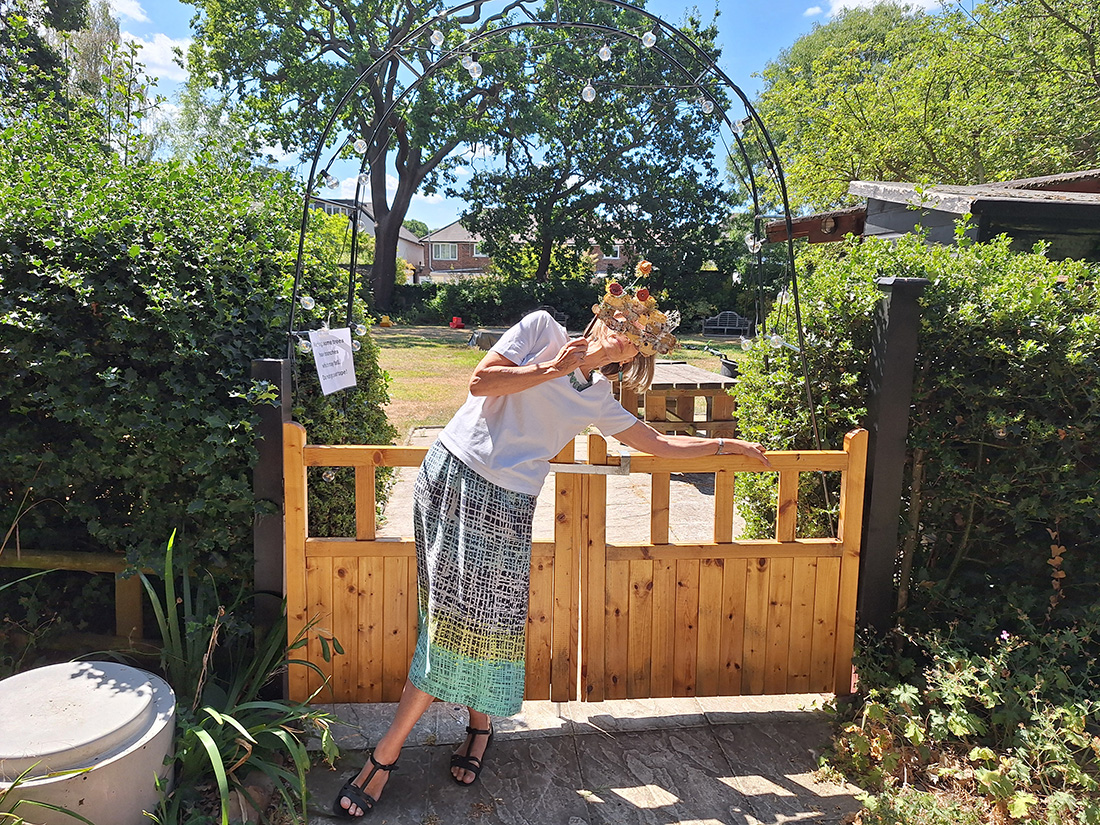
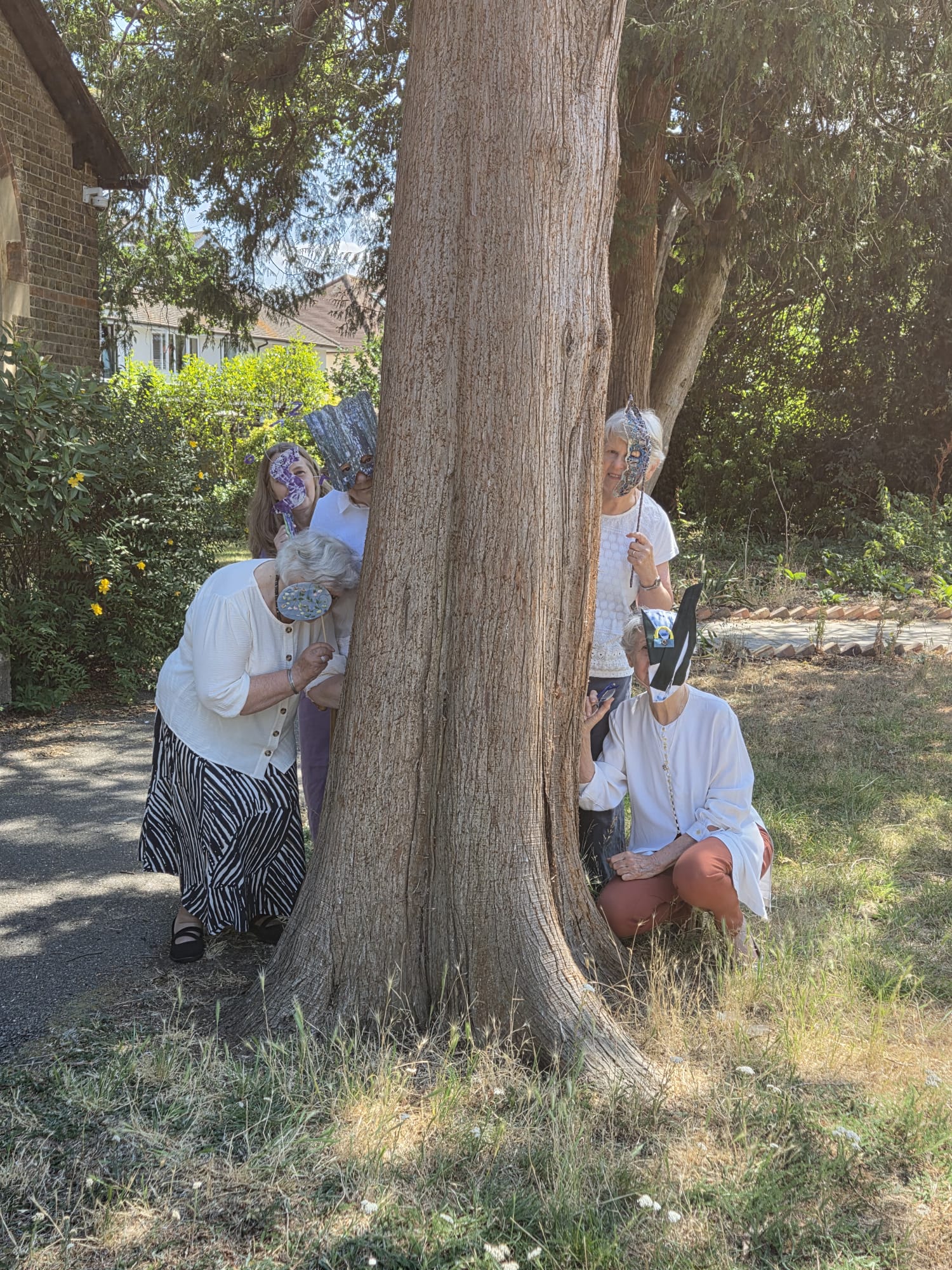
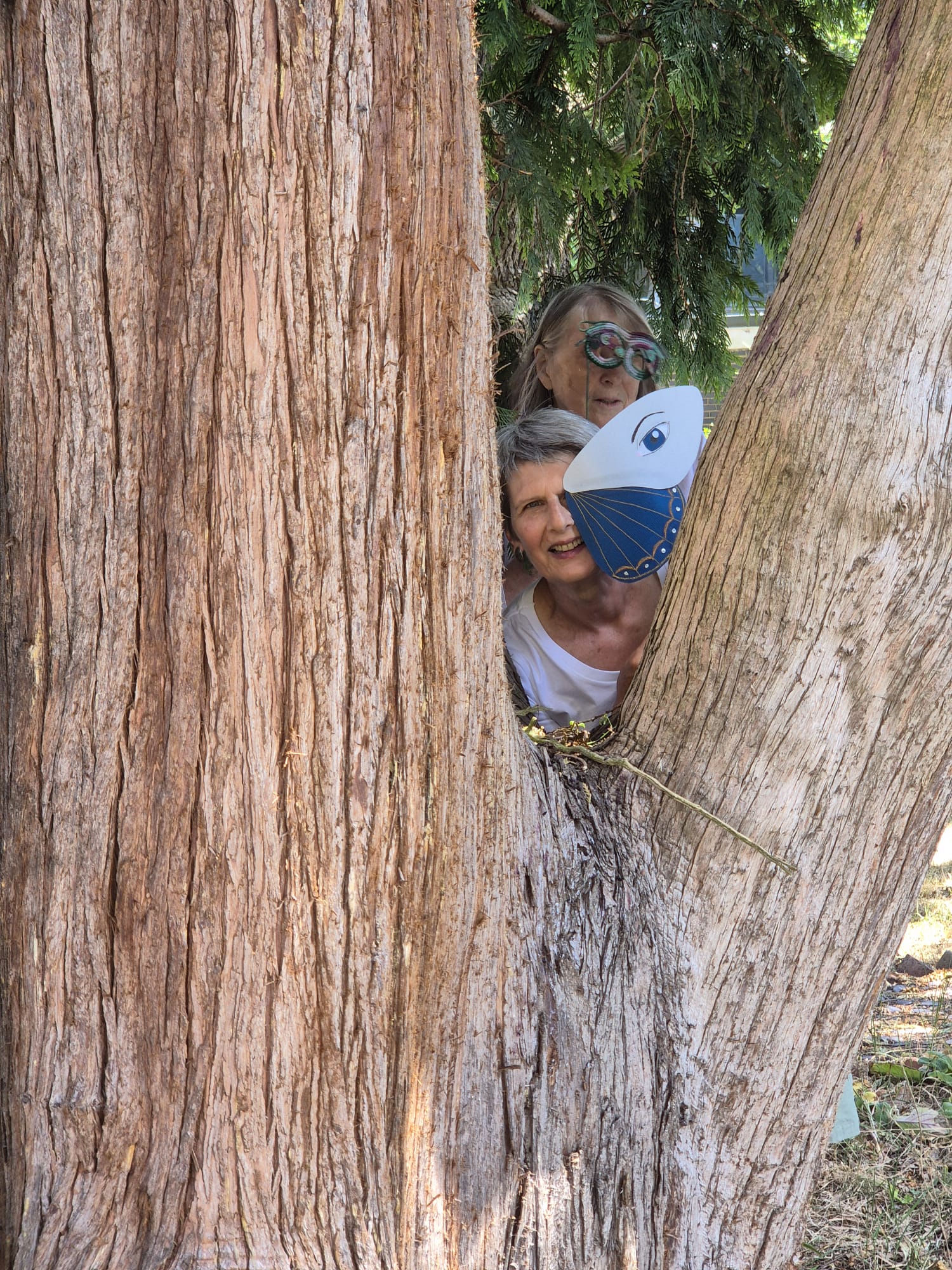
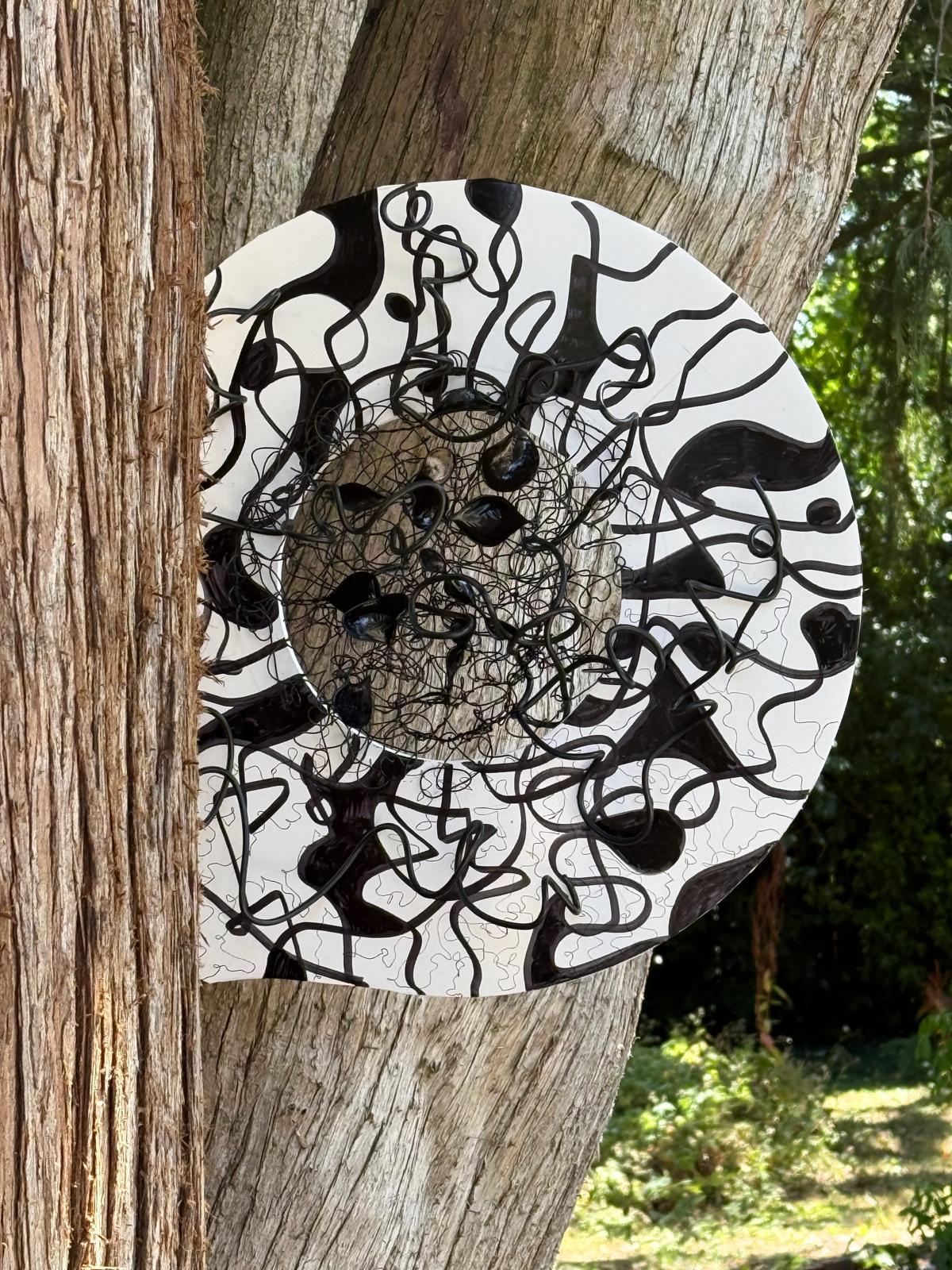
When the time came to take a new group photo, as usual we wanted to choose a theme to make it stand out and be more interesting. Our masks, which cover half of our faces and reflect something about our personalities or interests, introduce the new theme of “Traces” that we are working on for a new exhibition.
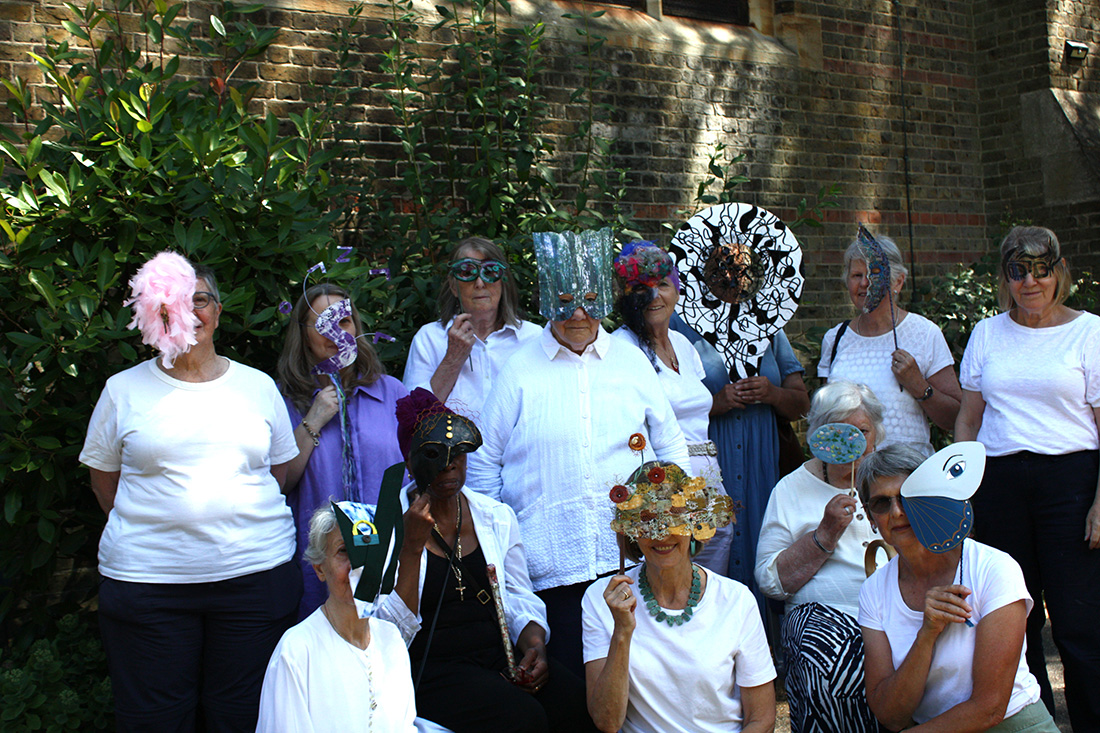
You can have a closer look at the individual masks below, where each artist also explains a little about the thinking and inspiration behind her creation.
Joan Glasgow
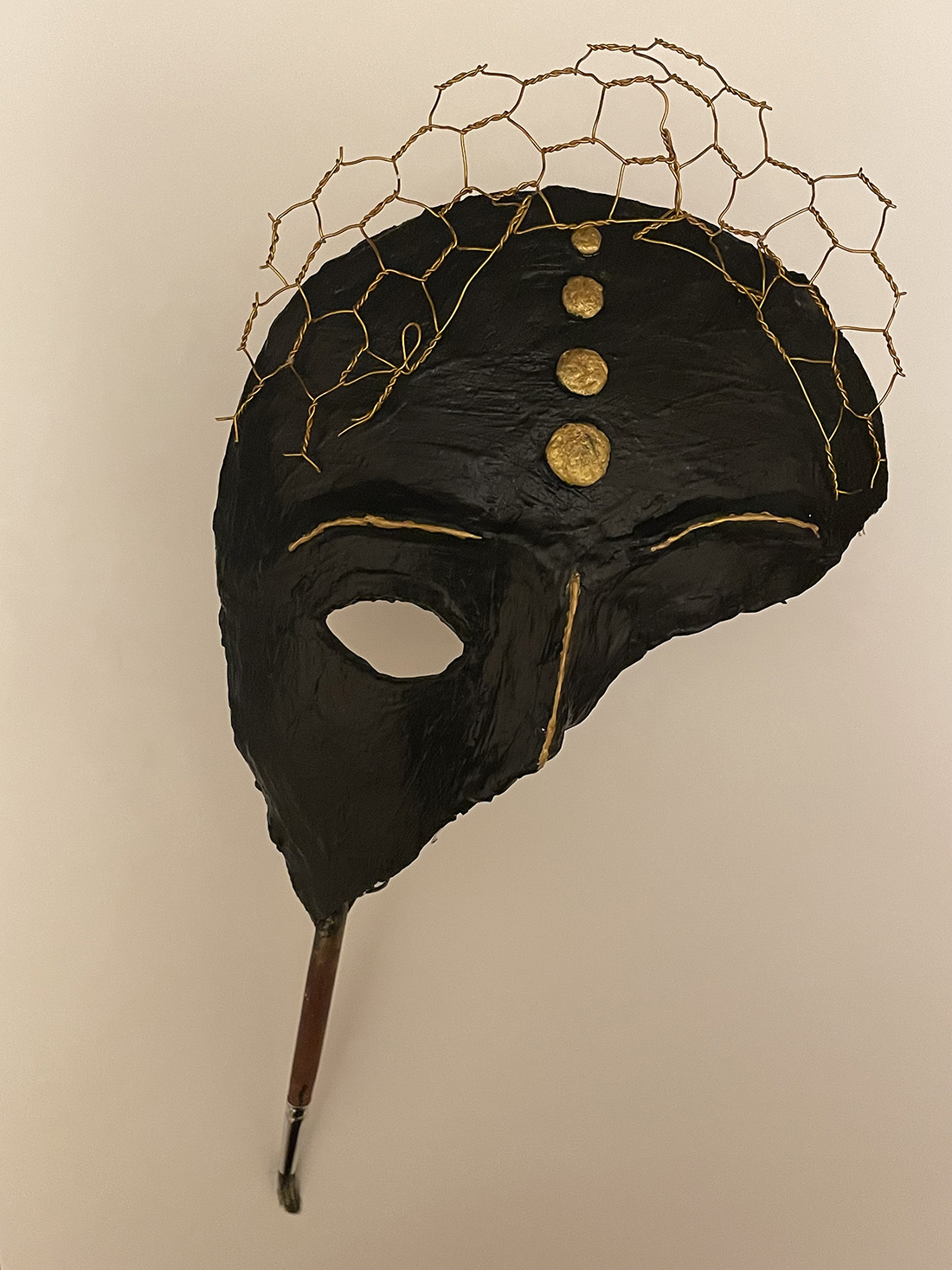
The following two exhibitions which I visited recently have largely influenced my mask:
- Kerry James Marshall: The Histories, at the Royal Academy – 20 September 2025 to 18 January 2026, and
- The Benin Bronzes, permanent exhibits at the British Museum; which I return to again and again.
Both exhibitions moved me quite emotionally and allowed me to explore my own identity in ways that I’ve not really thought of before.
Because of my background in fashion and the three-dimensionality of the human form, sculpture in particular is of perpetual interest to me.
Joan West
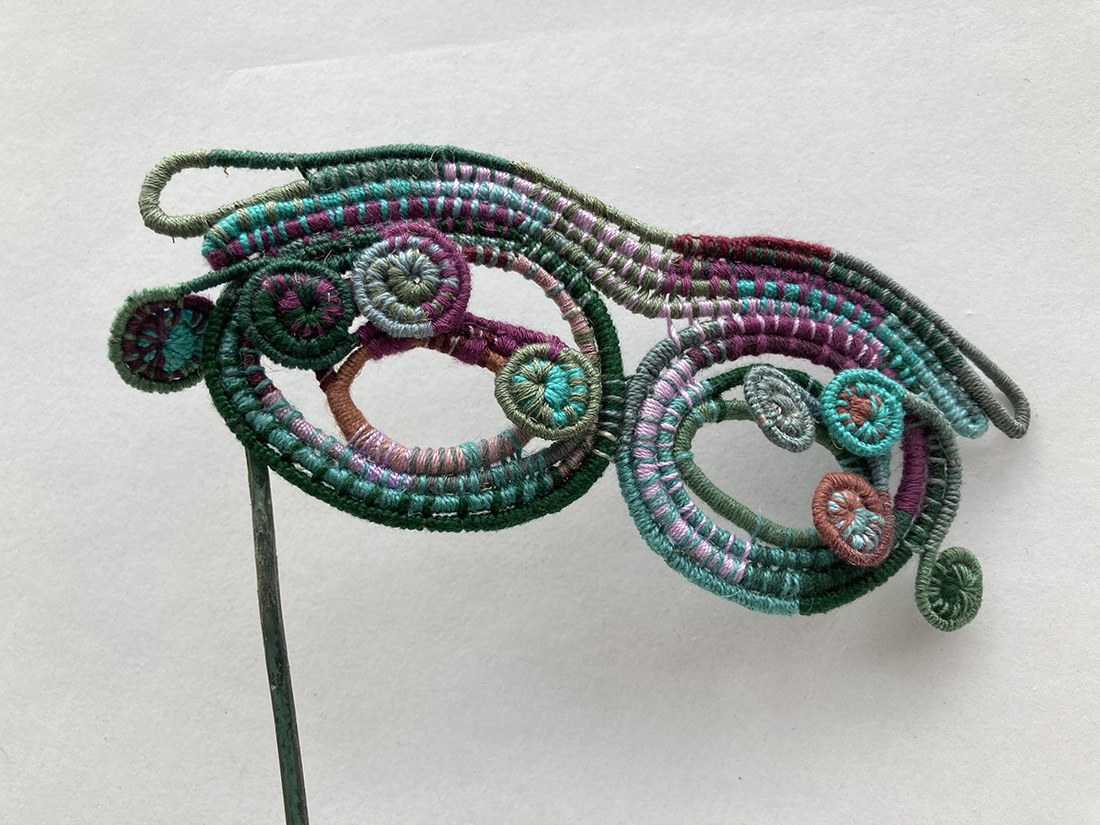
As a basket maker I thought that using coiling in a figure-of-eight stitch would be appropriate to make my mask.
Jo Coombes
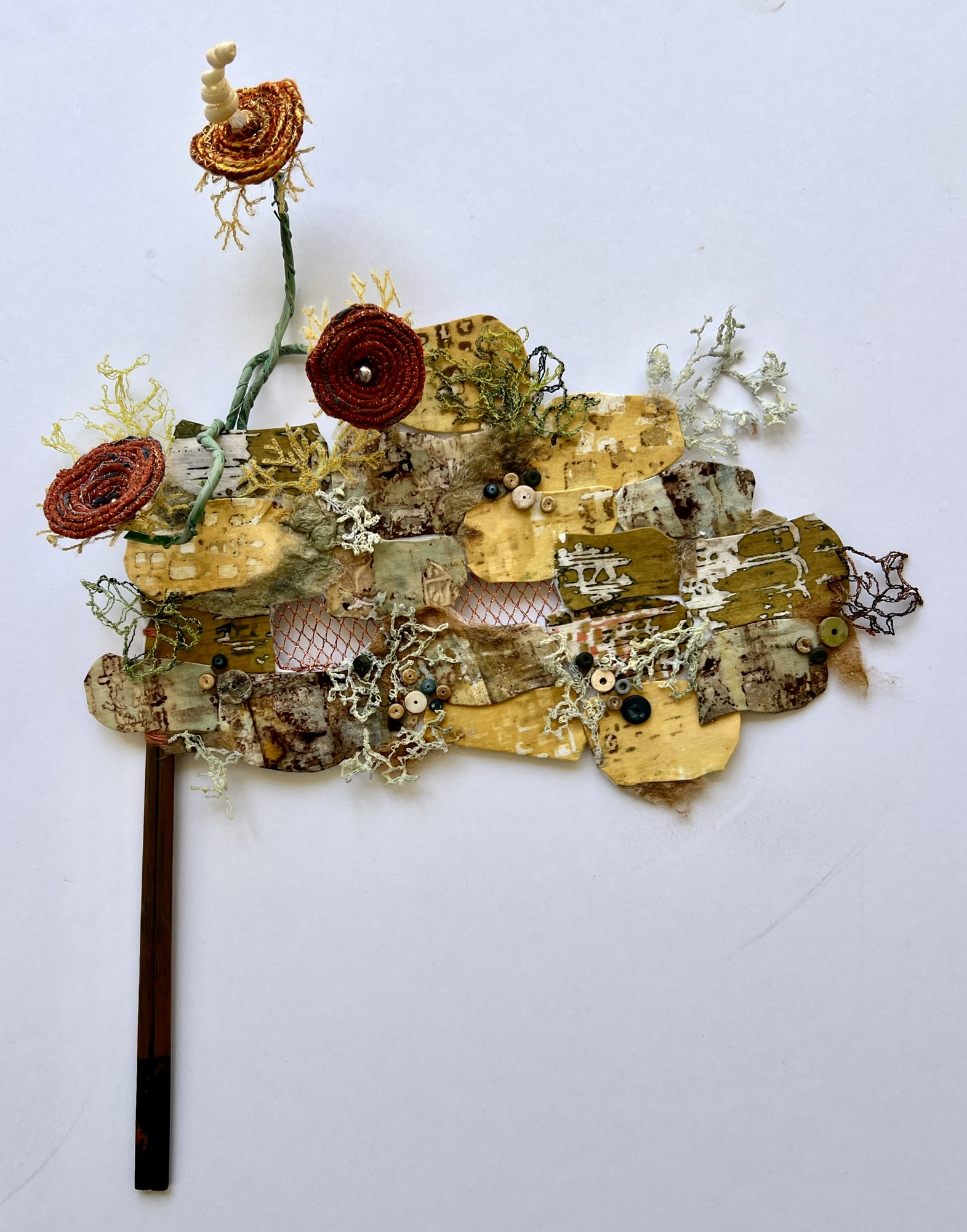
My inspiration for this mask was to use my love of old crumbling walls to reflect the human ageing process. I want to show that attractive adornments (flowers, beads etc) continue to make the most of one’s appearance. I think it sums me up well.
Rosaline Darby
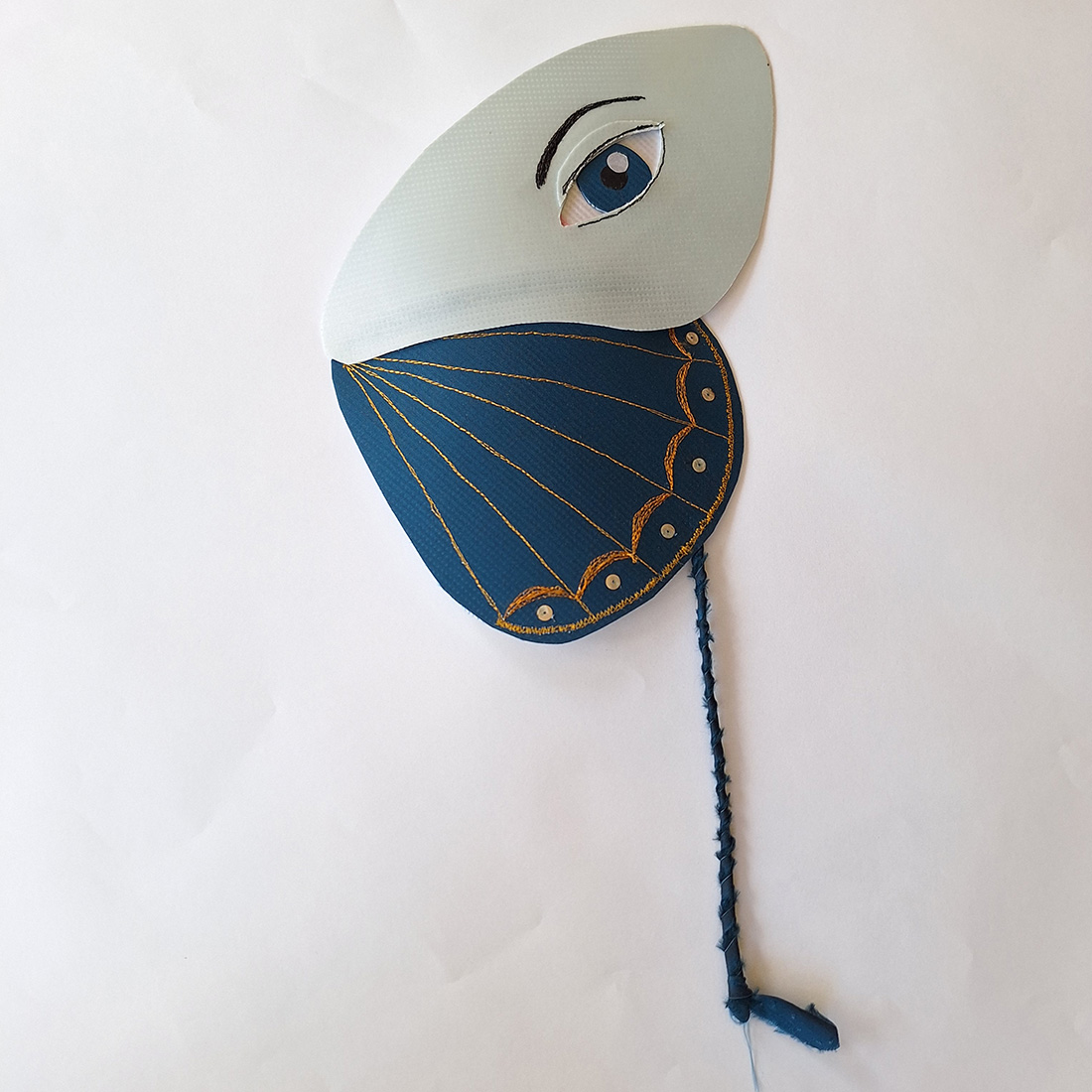
The wildlife that I see in my garden is always a prominent feature in my work, but I also like to challenge perceptions and make people stop and think with slightly surreal imagery. Both of these are combined in my mask.
Marie-Ghislaine Beaucé

Wanting to create a mask mainly of geometric patterns, my first attempt was a disaster; too bulky! The final product comprises some geometric shapes and strong contrasting colours in a sort of minimalist way.
Joan Bingley
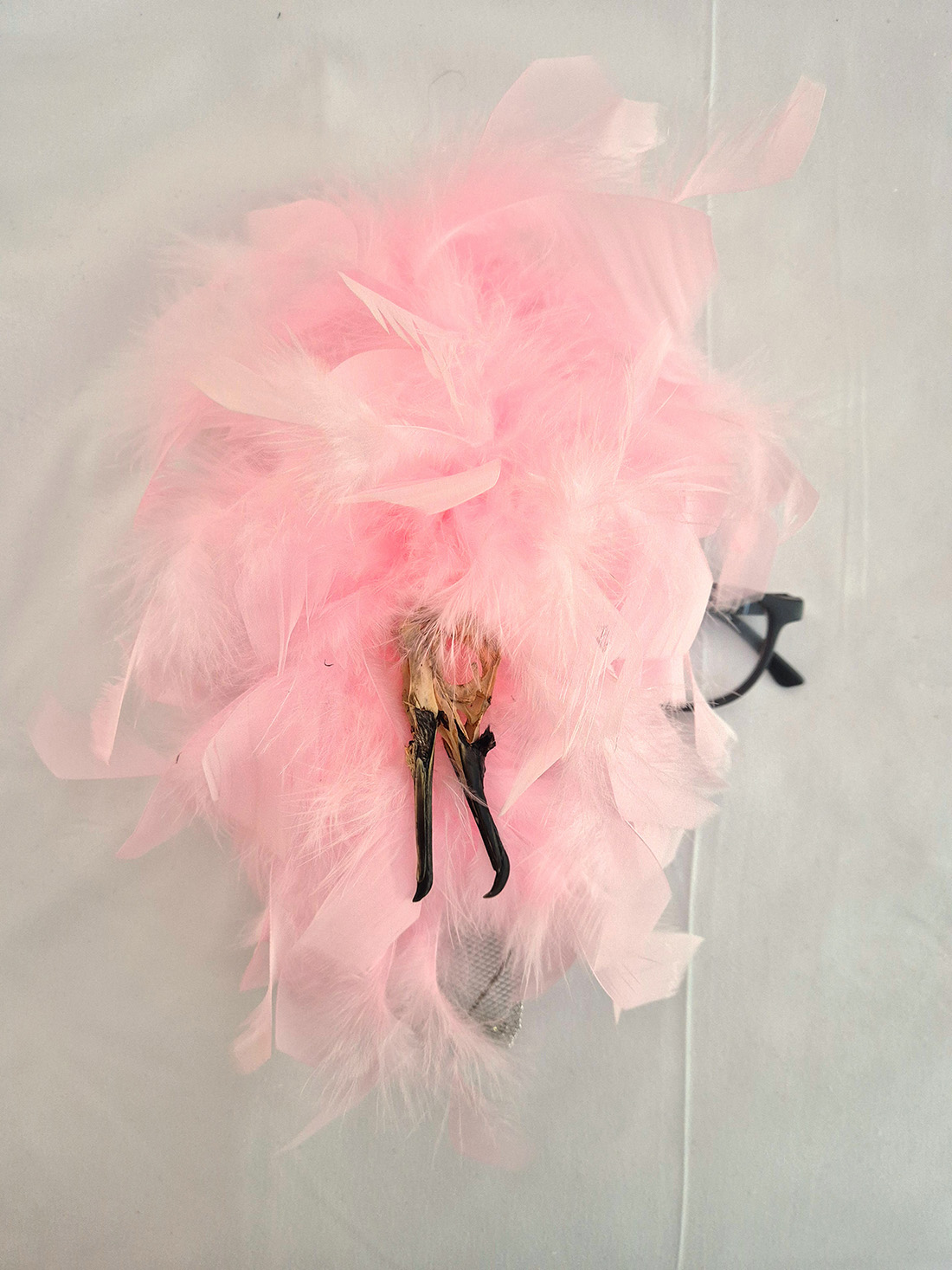
In choosing a mask to make, my textile work currently exploring the theme of traces and my birdwatching hobby came together as I laid out a selection of feathers and bones picked up in passing. Attaching the feathers proved time-consuming, so instead I used the end of a feather boa, adding a dark Manx Shearwater bill to provide contrast to the fluffy pink.
Lynne Butt

While making negatives for photopolymer plates it struck me that two of the shapes could be eye holes for my mask. The black cutout shapes embedded in thin plastic gives the look of a stylised tattoo.
Robertta McPherson
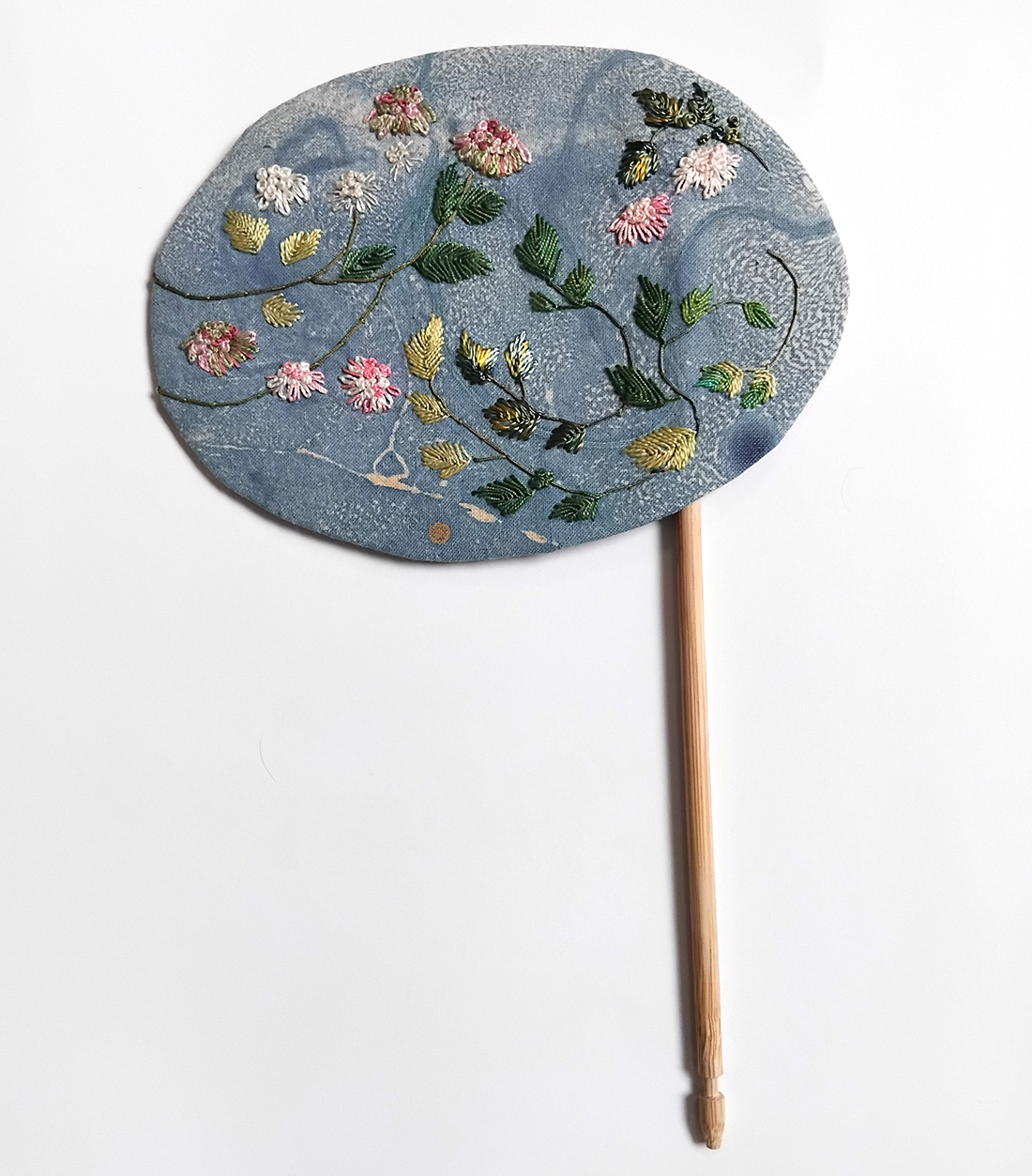
After some thought I decided that my mask should reflect my lifelong interests of stitching and gardening.
Bobbie Frances
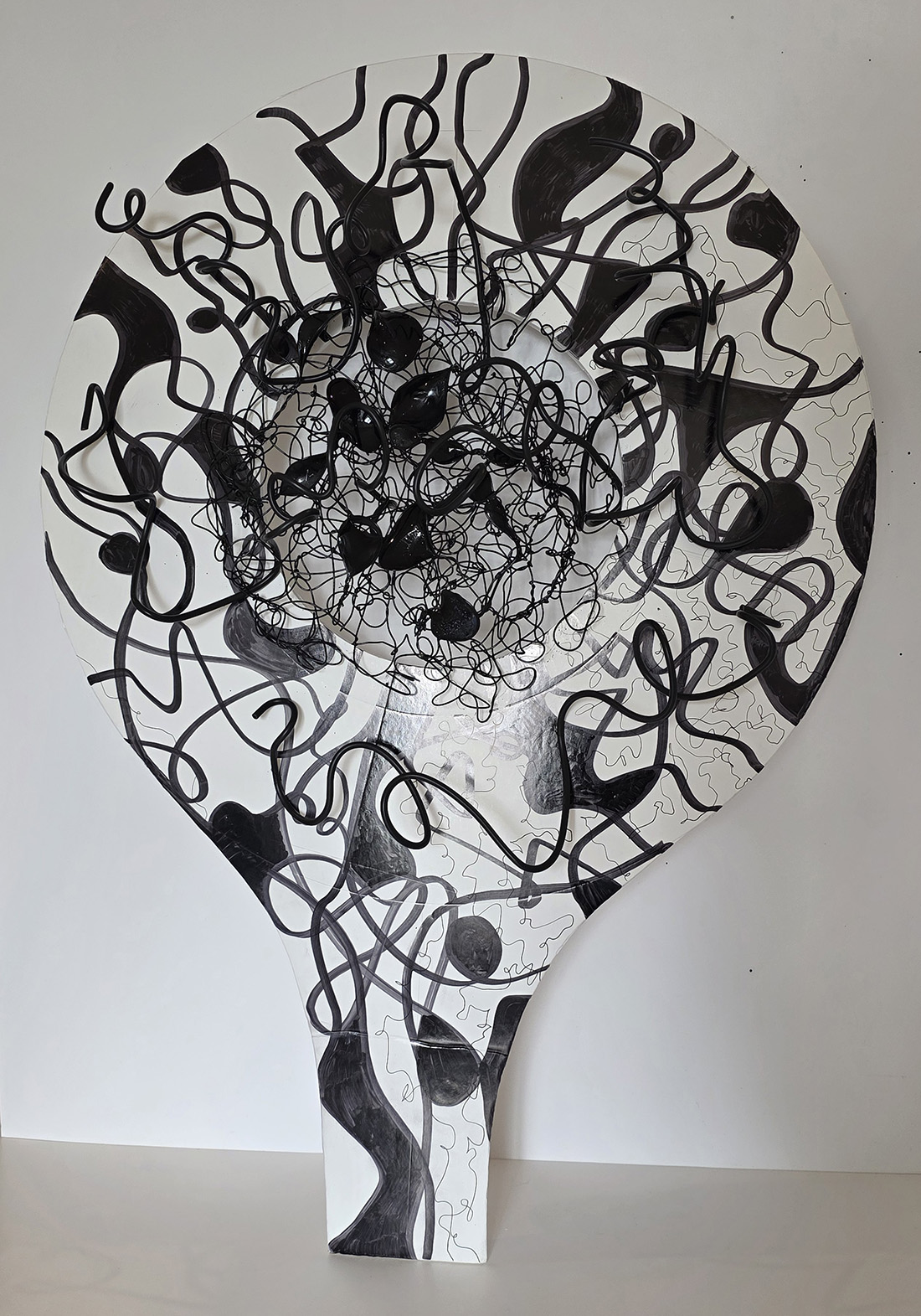
I guess the idea that I was exploring was, if 50% of your face is covered (roughly) is that enough to, in effect, make the face “invisible”. Could you disrupt the image of the face sufficiently to render it unrecognisable, even though 50% of it remains uncovered.
Linda Walsh
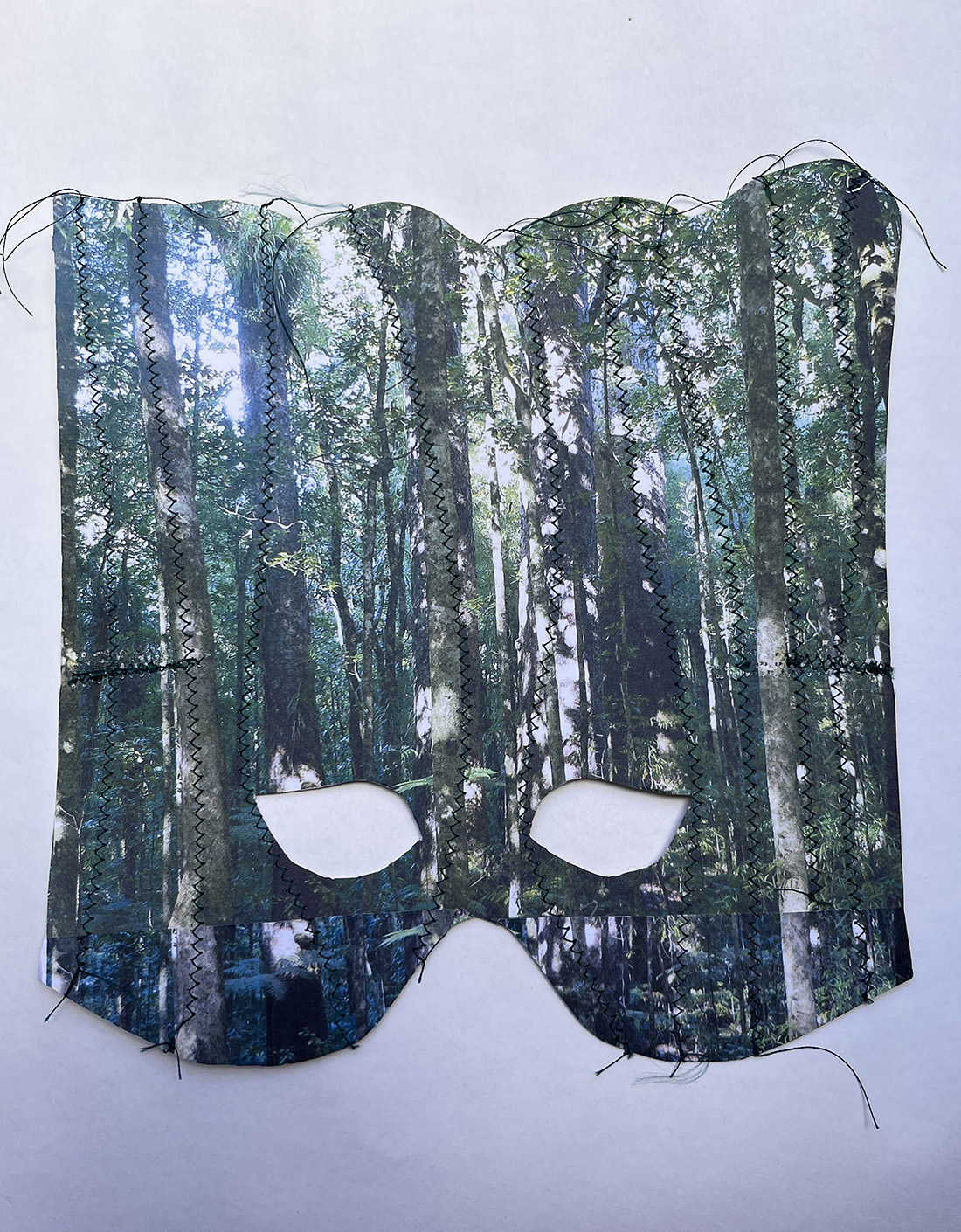
My mask is a representation of the ‘green man’ represented in art, architecture and costume in many parts of the world as a celebration of spring and re-birth. These foliage heads first appeared in England in the twelfth century.
Hazel Cilia
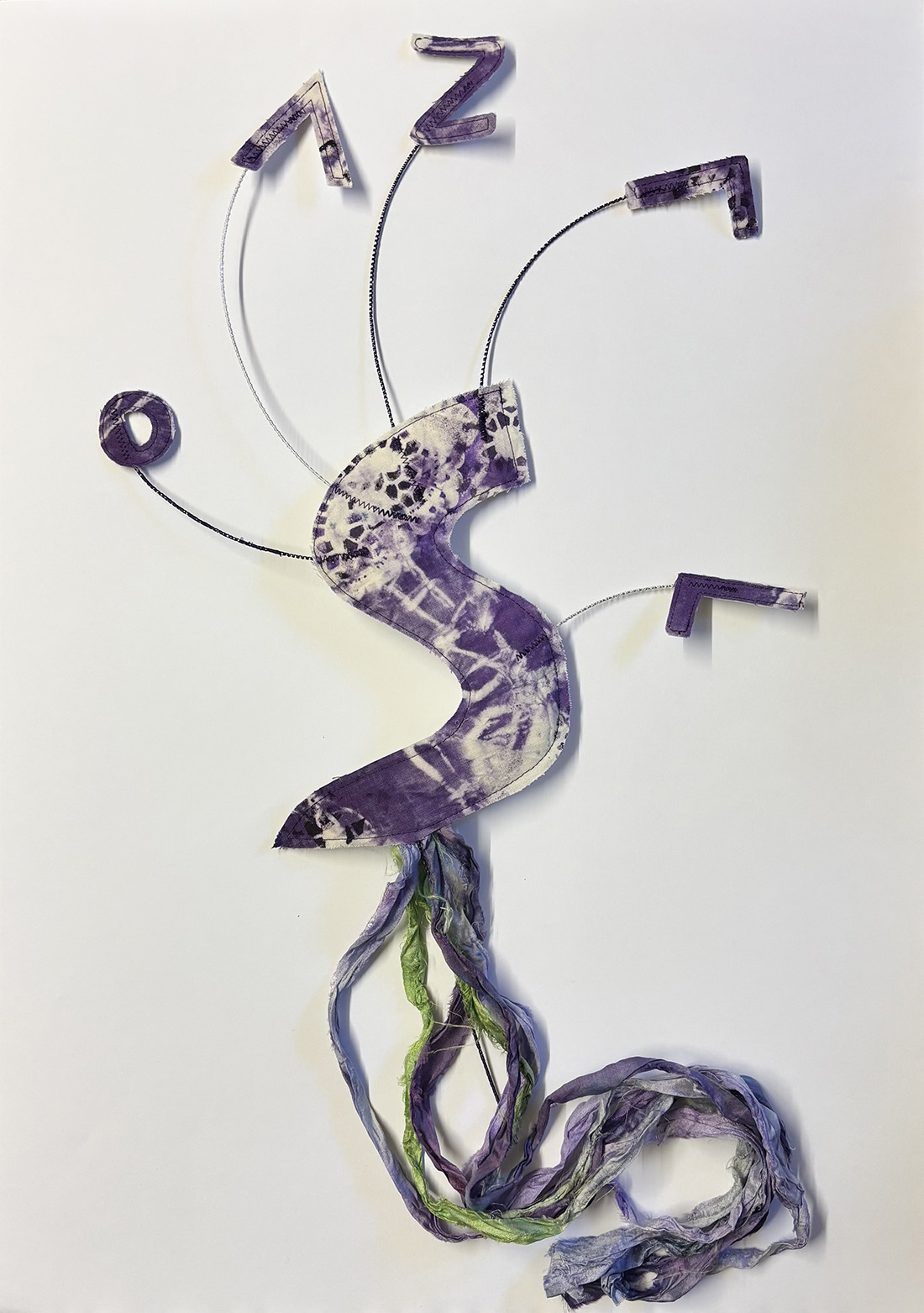
The use of Moon type (a language created for those with sight loss) to spell out my name but still conceal my identity to the uninitiated, gives a double meaning to the concept of the mask, I am literally hiding in plain sight.
Patti Taylor
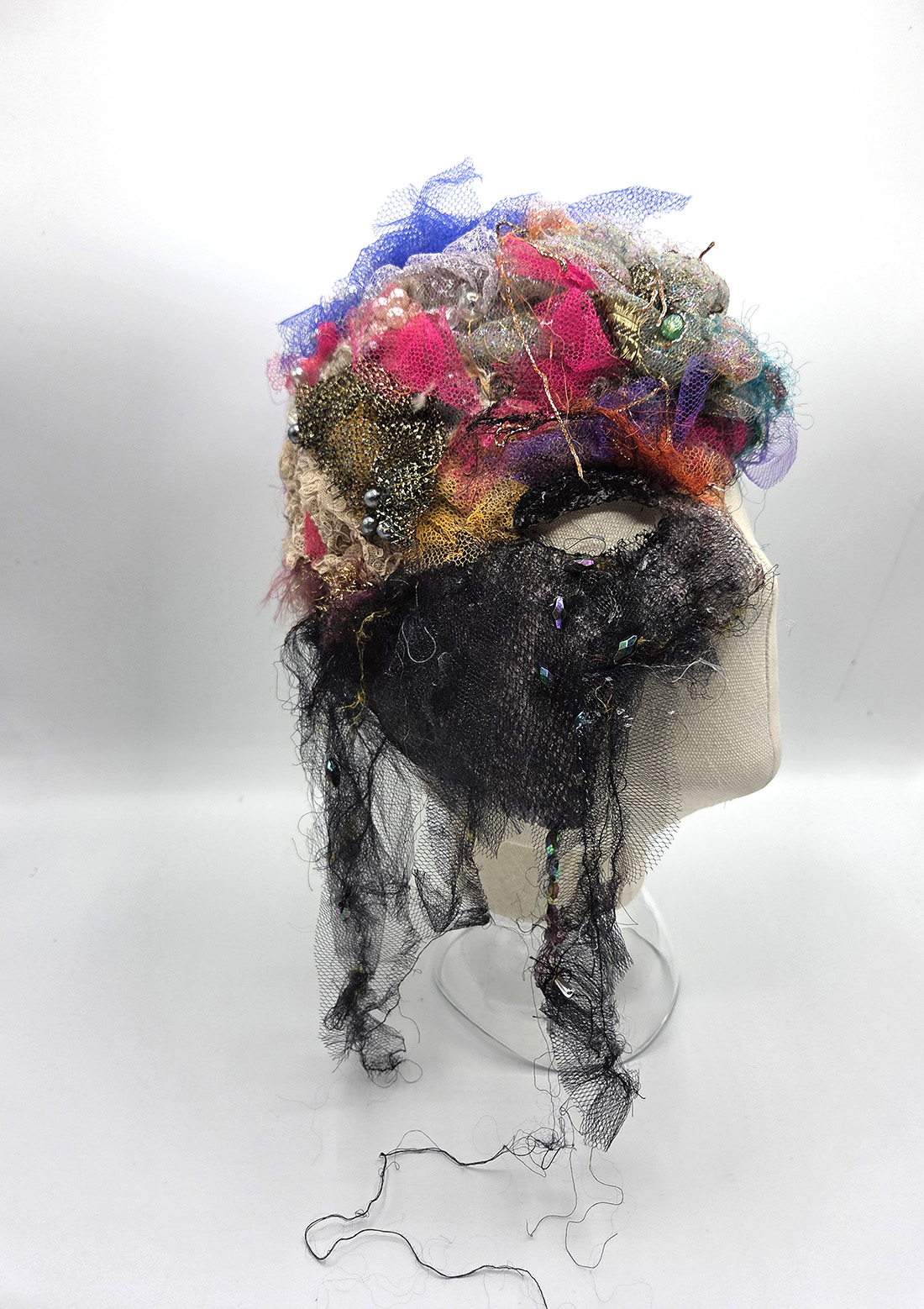
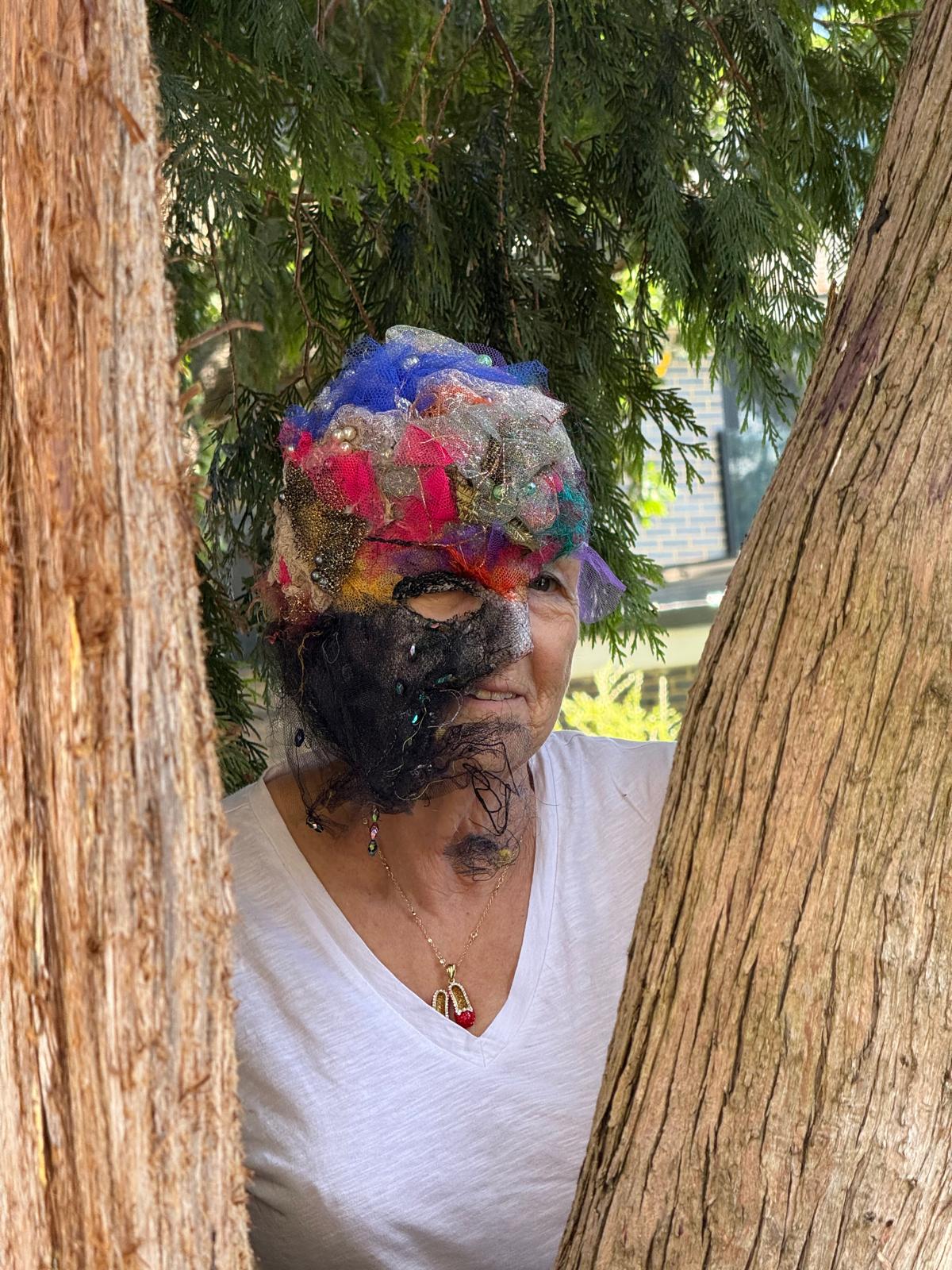
This mask contrasts the face I present to the world with the emotions I keep hidden. Vibrant, playful layers conceal a darker, fragile self, marked by loss, resilience and unspoken tears.
Kate Davis
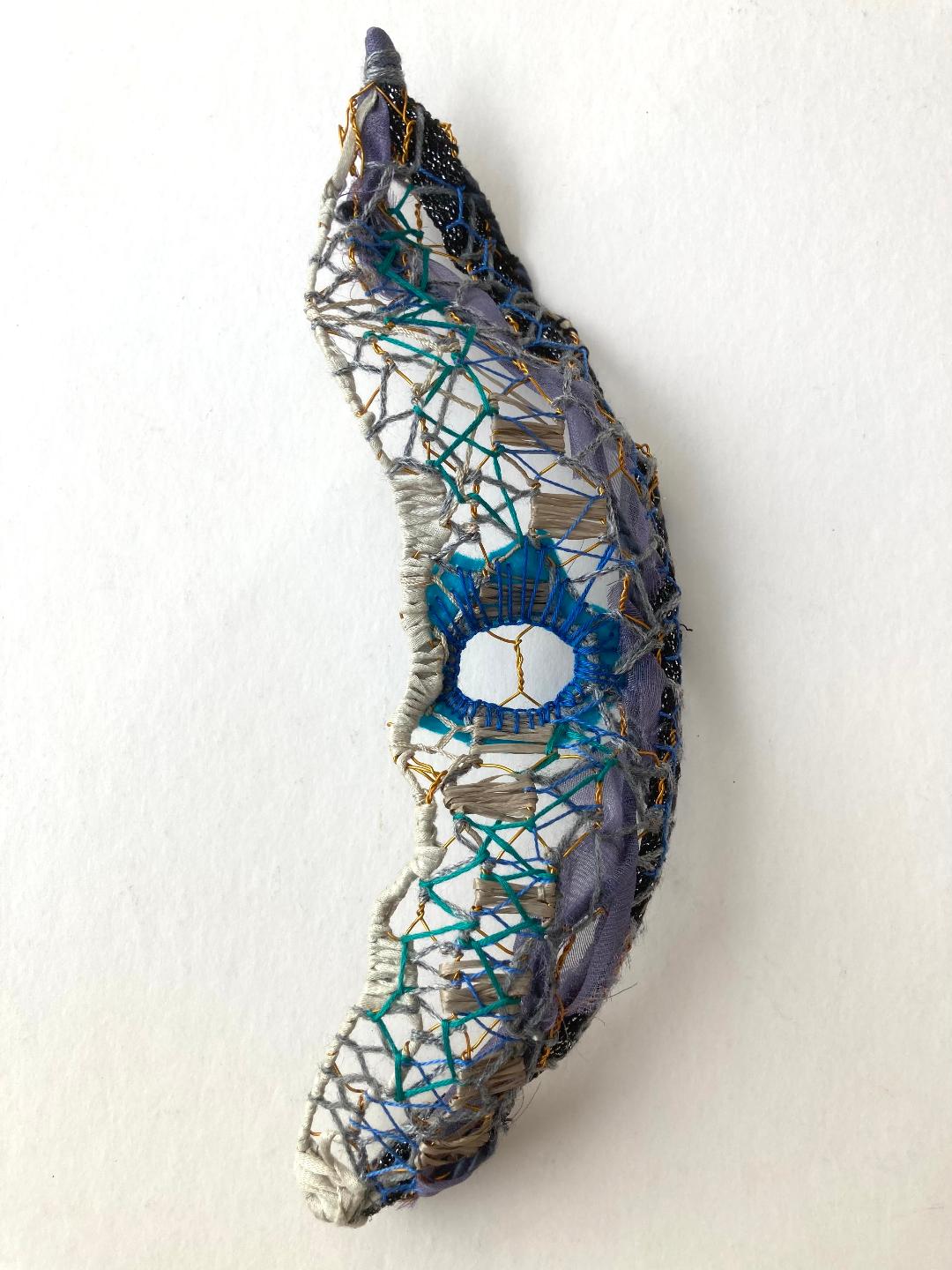
When I started making my mask I was thinking about the skeleton structures in nature, particularly seed heads. I was interested to see how the contours of the face could be shaped with wire netting and enhanced with stitch and weaving techniques.
We had a lot of fun taking the photographs!